Expanded and updated October 12, 2026. First published April 20, 2025.
Your plants aren’t eating your nutrients. “Plant food” is label language, and it hides what actually happens in your root zone.
What’s really going on is a delivery problem. Every nutrient you pour in has to dissolve, stay dissolved, reach a root, and cross a membrane that decides what gets in. Break any link in that chain and the plant comes up short, no matter how much product is sitting in the pot.
That chain runs on electrical charge. Once you see how, pH, EC, and “lockout” stop being numbers you chase and start being problems you can reason through.
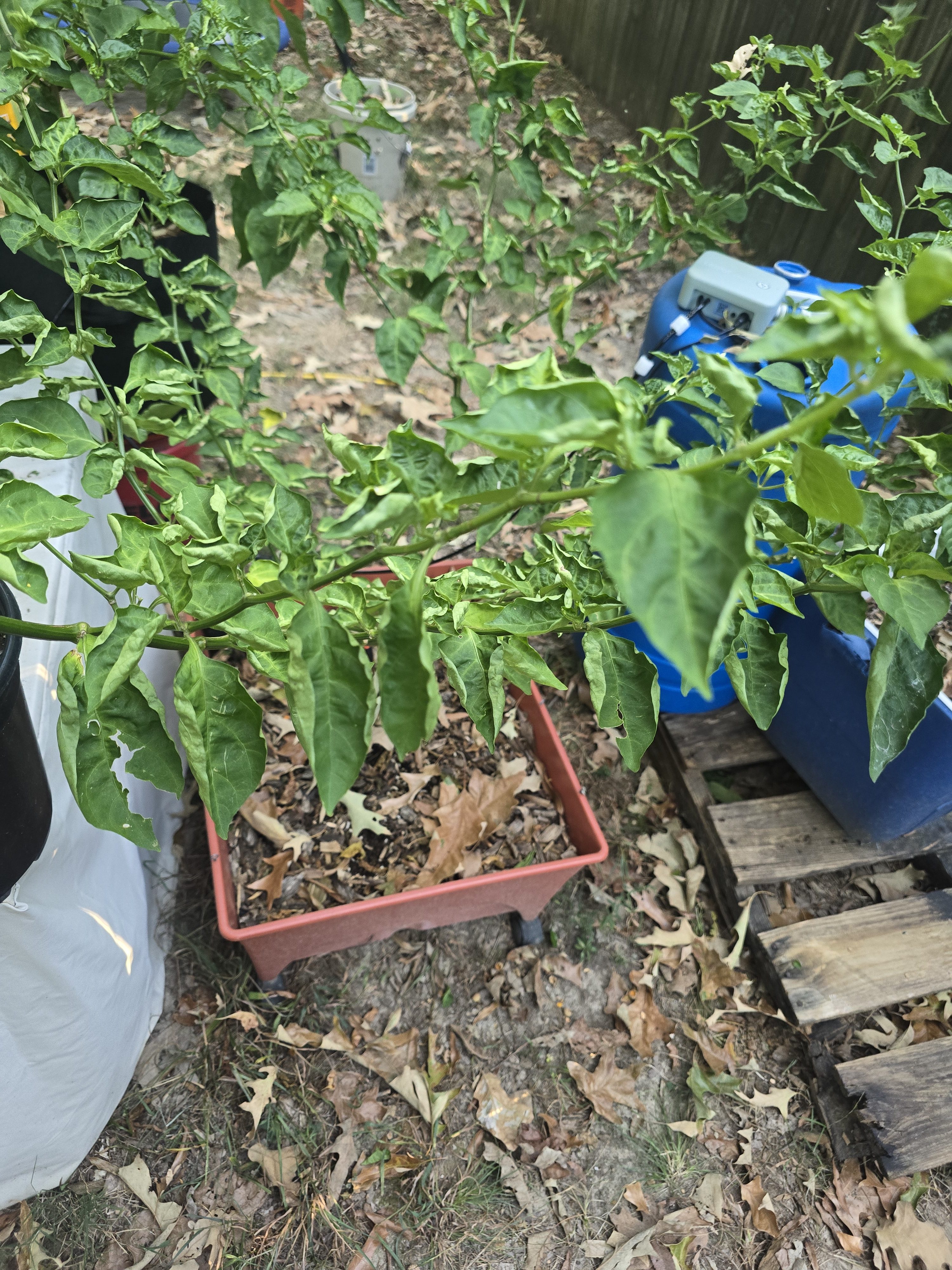
Quick diagnosis: if a plant looks hungry despite regular feeding, check moisture and air, then root zone pH, then EC. For a container plant, start by looking for a medium that stays saturated between waterings and checking whether excess water can drain freely. Prolonged saturation can reduce the oxygen available to roots. These observations give you a starting point; they don’t establish the cause on their own. The full root zone check near the end follows the same order.
What an Ion Actually Is
An ion is an atom, or a small group of atoms, that carries an electrical charge.
When fertilizer salts dissolve in water, they split into ions. Potassium nitrate becomes potassium (K⁺, positive) and nitrate (NO₃⁻, negative). Calcium travels as Ca²⁺, and at the pH most growers run, phosphorus shows up mostly as phosphate ions like H₂PO₄⁻.
Positive ions are called cations. Negative ions are called anions. That one detail decides where a nutrient sits in your medium, how easily it washes out, and how your roots pull it in.
Your label speaks N-P-K. Your roots speak ions.
Two Connected Processes: Exchange and Uptake
Most grow advice blurs two different processes together. One is exchange in the medium, where nutrients are held and released. The other is transport into the root, where nutrients actually cross into a living cell.
They’re connected, but they aren’t the same. A nutrient can be sitting in the pot and still not be getting into the plant.

Step 1: Exchange in the Growing Medium
Clay, organic matter, peat, and coco coir carry negative charges on their surfaces. Opposite charges attract, so those surfaces hold onto cations like potassium (K⁺), calcium (Ca²⁺), magnesium (Mg²⁺), and ammonium (NH₄⁺).
Those ions aren’t stuck. They trade places with ions in the surrounding water, so as roots pull potassium out of the water, more can come off the surfaces to replace it. That trading is cation exchange, and how much a medium can hold this way is its cation exchange capacity, or CEC.
Think of CEC as the size of the bank’s storage space. It tells you how much positive charge the medium can hold, not which nutrients are currently there or whether their amounts are sufficient. Higher CEC can help retain nutrient cations, but it does not guarantee a balanced supply.
Anions play by different rules. Most media hold very little nitrate (NO₃⁻), so nitrate goes wherever the water goes. Overwater or flush hard, and it washes out the bottom of the pot.
Broad tendencies, which vary with composition and treatment:
- Mineral soil with clay and organic matter: often substantial CEC
- Peat-based mixes: often substantial CEC
- Coco coir: appreciable but variable CEC; exchange sites can initially hold potassium and sodium
- Rockwool, perlite, clay pebbles: generally little cation retention
- Water culture without a substantial growing medium: the solution provides the main nutrient supply.
That last group explains why changes to a hydroponic solution can affect the root environment quickly. The response also depends on solution volume, circulation, chemistry, and the plant.
Example: What “Buffering” Coco Actually Does
If you’ve buffered coco, you’ve already run an ion exchange experiment.
Raw coco comes loaded with potassium and sodium, much of it sitting on its exchange sites. When your feed brings in calcium and magnesium, the coco can grab them and release potassium and sodium in trade. Early in a run, that can leave plants short on calcium and magnesium even when the feed has plenty.
Washing rinses out loose salts, but it doesn’t reliably clear what’s held on the exchange sites. Buffering does: soak the coco in a calcium solution (calcium nitrate is common, sometimes with magnesium) before planting. Calcium takes over the sites and pushes potassium and sodium out, so the swap happens in a bucket instead of around your roots.
One note: in coco, “buffering” isn’t about pH. It’s about loading the exchange sites. Same word, different job.
Step 2: Transport Into the Root
First, nutrients have to reach the root surface. Most ride in with water as the plant pulls it toward the roots to replace what the leaves lose to the air. Phosphorus and potassium often reach roots mainly by diffusion: as uptake lowers their concentration near the root, dissolved ions move in from areas with higher concentrations.
Then comes the hard part: crossing into a living root cell. Each cell is wrapped in a membrane that charged particles can’t simply drift through. Ions get in through transport proteins built into that membrane, and most of those proteins are picky about what they carry.
Some transport is passive: ions move down their combined electrical and concentration gradient without the transporter directly consuming ATP. Maintaining those gradients can still cost the plant energy. Other transport moves nutrients against their gradient using energy supplied directly or indirectly by the cell.
Roots run proton pumps that push hydrogen ions (H⁺) out of the cell, charging the membrane like a battery. Other transporters tap that charge to pull nutrients in, even against the gradient.
That energy comes from root respiration, which burns sugars sent down from the leaves and needs oxygen. Hold onto that. It comes back.
Deeper in, a sealed band in the root’s inner cell layer (the Casparian strip) blocks the shortcut around the membranes. Anything headed for the rest of the plant has to pass through living cells first. That’s the real checkpoint.
Roots in Plain Terms: A Loading Dock, Not a Coffee Filter
A coffee filter is passive. It lets small stuff through and catches the big stuff. Roots don’t work that way.
A better picture is a receiving dock, with each door built for specific freight. Some doors have gravity rollers, and freight rolls in on its own. Others need a powered crew, running on fuel the root makes from sugar and oxygen.
When conditions go bad, the dock doesn’t slam shut. Throughput drops.
- Cold root zone: everything slows. Membranes stiffen, enzymes drag, and water moves sluggishly.
- Waterlogged media: oxygen runs out, so the powered crews lose their fuel.
- Salty root zone: concentrated salts make it harder to pull in water, and excess ions crowd the doors meant for the nutrients you want.
That’s why uptake problems usually creep in rather than appearing overnight. It’s also why fixing the root zone brings uptake back, as long as the roots themselves haven’t been damaged.
Roots Trade Charges, Too
Here’s the part most grow guides skip. Roots keep their own electrical balance, and that changes the pH around them.
When the plant takes in more positive ions than negative ones, it pushes out hydrogen ions to balance, acidifying the root zone. When it takes in more negative ions, nitrate being the big one, the effect tends to flip toward alkaline.
That’s charge balance at work, and it can change the chemistry around the root. It’s one reason a hydro reservoir running a nitrate-heavy feed tends to creep up in pH during heavy growth. It’s also why many formulas carry a small share of ammonium nitrogen to pull the other way; too much ammonium brings its own problems.
pH: A Dimmer, Not a Light Switch
pH controls which chemical form a nutrient takes, and whether it stays dissolved where roots can reach it.
Let pH run high, and iron, manganese, zinc, and phosphorus get harder to keep in solution. Let it run low, and calcium and magnesium availability drops, while iron and manganese can climb toward toxic levels in sensitive plants.
None of that flips at a single number. Availability shifts gradually across a range, and every nutrient has its own curve. “Lockout” is handy shorthand for “present but unavailable,” but it works like a dimmer, not a breaker.
The effect depends on how far pH shifts, how long it stays there, the growing medium, and the plant. Interpret the reading alongside symptoms and the trend over time.
Working ranges, as a starting point:
- Soilless mixes (peat-based, coco): roughly 5.4 to 6.2
- Hydro (DWC, NFT, rockwool): roughly 5.5 to 6.5
- Mineral soil: roughly 6.0 to 7.0
Your crop, medium, and water decide where inside those ranges you aim.
Two things trip growers up here:
- The pH that counts is at the roots. Your watering can is just the starting point. The medium, root activity, and your water all move pH after you pour.
- Alkalinity helps explain pH changes over time. For predicting how irrigation water will shift a container medium’s pH, alkalinity is often more informative than the water’s pH alone. Alkalinity, mostly bicarbonates, is your water’s capacity to neutralize acid. High-alkalinity water drags media pH up over time, and a water test tells you whether that’s working against you.
EC: The Volume Knob
EC (electrical conductivity) measures how well your solution carries an electrical current. Dissolved ions carry that current, so more ions means a higher reading. That makes EC a fast, solid read on total dissolved salts.
Here’s what it can’t tell you:
- Which ions are in there. Sodium and chloride from your tap raise the reading just like the potassium and nitrate you paid for.
- Whether the ratios make sense. A feed can hit your EC target and still run short on calcium.
- The full nutrient supply. Uncharged substances such as urea contribute little directly to conductivity. Amino acids differ in charge, and plants can absorb some organic nitrogen directly. EC alone cannot show how much nutrition an organic input will supply or how quickly it will become available.
Think of EC as the volume in a crowded room. It tells you how loud it is, not who’s talking.
Too low, and plants can run short. Too high, and the root zone gets salty enough to fight the plant for water. That’s osmotic stress, and it’s behind a lot of what growers call “nutrient burn.”
Targets shift with crop, growth phase, medium, and environment. Track EC as a trend: input against runoff, sampled the same way every time. Runoff that keeps climbing above what you feed usually means salts are building up in the medium.
Oxygen: The Input Nobody Bottles
Active uptake runs on root respiration, and respiration runs on oxygen. Cut off the air and the powered side of the dock is the first to slow down.
Oxygen gets squeezed out by:
- Media that stays saturated, with no air space between waterings
- Dense or broken-down media that never drains well
- Warm, still reservoirs. Warmer water holds less dissolved oxygen, and stagnant, low-oxygen water gives root rot organisms an easy start.
That’s why many hydro growers keep reservoirs around 65 to 72°F (about 18 to 22°C) and keep the water moving or aerated.
Chelation: Keeping Micronutrients in Play
Some nutrients don’t like staying dissolved. Iron is the classic case: as pH rises, it reacts with other compounds and drops out of solution in forms roots can’t use.
A chelate is a molecule that wraps around a metal ion and grips it at several points. (The word comes from the Greek for “claw.”) That grip keeps iron, zinc, manganese, and copper dissolved and available longer.
In most broadleaf plants, iron is released from the chelate at the root surface and then absorbed. The chelate is the packaging, not the product.
This is one place both sides of the Synganic toolkit pull weight:
- Synthetic chelates are predictable. EDTA, DTPA, and EDDHA each hold iron across a different pH range, and EDDHA holds on furthest into alkaline conditions.
- Organic matter brings natural chelators. Humic and fulvic substances, organic acids, and compounds made by microbes can all bind micronutrients. Less predictable, but another layer of hold.
- Microbes turn organic nutrients into ions. As they break down organic matter, they release nutrients into the soil solution in plant-available form. That’s mineralization, and it’s how amended soil and organic inputs go from “in the mix” to “available.”
Root Zone Check: Run This Before You Reach for Another Bottle
- Moisture and air: in containers, check whether the medium stays saturated between waterings and whether excess water can drain freely through the drainage holes. Persistent saturation can leave less oxygen around roots. These are clues to investigate, not proof of a particular diagnosis.
- Root zone pH: test the root zone, not just the feed. A consistent sampling method, like the PourThru test, beats spot checks.
- EC: a rising reading or surface crust can signal salt accumulation. Confirm the pattern with a consistent sampling method and interpret it for the medium and plant before choosing a treatment.
- Temperature: cold roots work slowly. In hydro, aim for roughly 65 to 72°F (about 18 to 22°C).
- Water alkalinity: if container pH keeps climbing, test your source water.
- Reservoir condition: warm, stagnant water can increase the risk of low oxygen and root disease; appearance alone does not establish either problem.
- Your meters: pH pens drift. Calibrate against standard solutions on a schedule; a pen reading 0.3 off will have you fixing problems you don’t have.
- Test before you treat: water, media, and tissue tests tell you what’s actually there before you add more.
Stop chasing symptoms. Fix the root zone, not just the leaf.
Where This Model Stops
“Plants take up nutrients as ions” is the right default. It isn’t the whole story.
- Boron enters mostly as boric acid, which carries no charge.
- Some organic molecules get absorbed directly, including urea and certain amino acids.
- Microbes themselves may be on the menu. Research on rhizophagy suggests some plants take soil microbes into root cells and pull nutrients from them. How widespread and how important that is remains open.
None of this throws out the ion model. It’s a reminder that roots are more flexible than any one diagram, and that treating them as pure chemistry leaves the biology out. Chemistry plus biology: that’s the whole Synganic premise.
The Bottom Line
Feeding isn’t pouring. It’s delivery: getting the right ions dissolved, within reach, and through a membrane that opens for the right freight under the right conditions.
Your medium decides how much gets stored. pH decides what stays available. Oxygen and temperature decide how hard the roots can work, and EC tells you how much is in the water, not what.
Master the science, not the marketing.
Next read: ions aren’t the only thing roots go after. Root Farming: How Your Plants Harvest Bacteria for Nutrients digs into the research on roots pulling nutrients from microbes.
Sources
- Soil organic matter in cropping systems, University of Minnesota Extension: ions, cation exchange capacity, nitrate leaching, mineralization
- pH and Electrical Conductivity Measurements in Soilless Substrates, Purdue Extension HO-237-W: soilless pH range, what EC measures, alkalinity, PourThru testing
- Interpreting Irrigation Water Tests, Penn State Extension: alkalinity vs. pH, high-EC water and root function, sodium and chloride
- Why soil pH matters, and how to manage it in your garden, Oregon State University Extension: pH and nutrient availability, soil pH ranges
- Ammonium-nitrate ratio and cation/anion uptake affect the acidity or basicity of floriculture species, Dickson and Fisher, Acta Horticulturae 1168 (2017): root uptake balance and solution pH
- Cation availability in buffered coco pith and the effect on growth of tomato plant, Ranaweera, Dharmakeerthi, and Gunasena, Peradeniya University International Research Sessions (2015): calcium nitrate buffering of coir
- Growing Vegetables in Containers and Salad Tables, University of Maryland Extension: container drainage, saturated pore spaces, and oxygen around roots
- Nutrient movement to roots, Cornell University: mass flow, diffusion, and root interception
- Energization of Transport Processes in Plants, Plant Physiology: membrane transport and proton pumps
- Amino Acid Transporters in Plant Cells: A Brief Review, research review: amino acid transport and direct organic nitrogen uptake
Join the Grow List
Get new Synganic Gardening articles and updates.

Leave a Reply